Project
Lemon Fish
Restaurant concept. Paradisus Cancún.
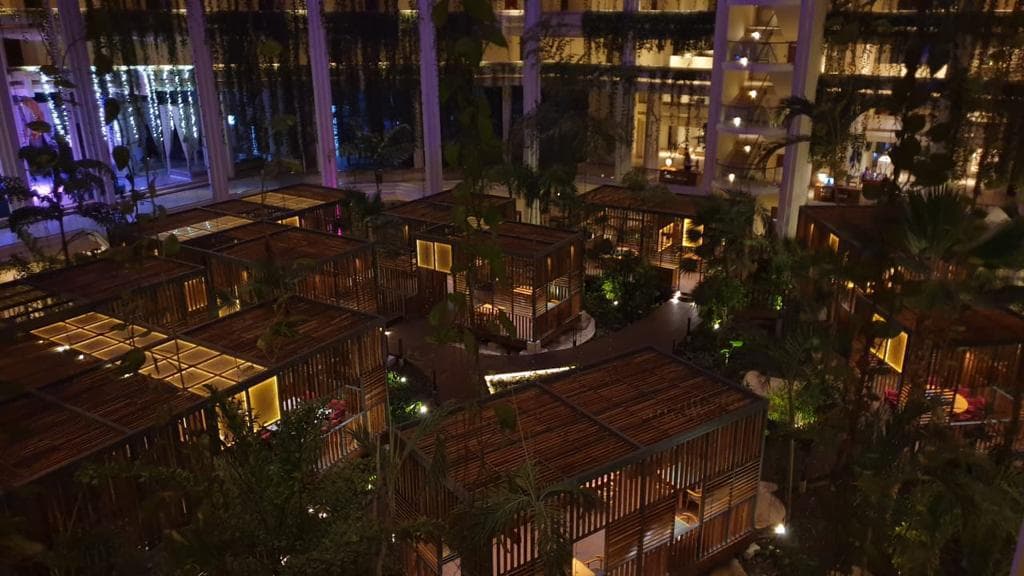
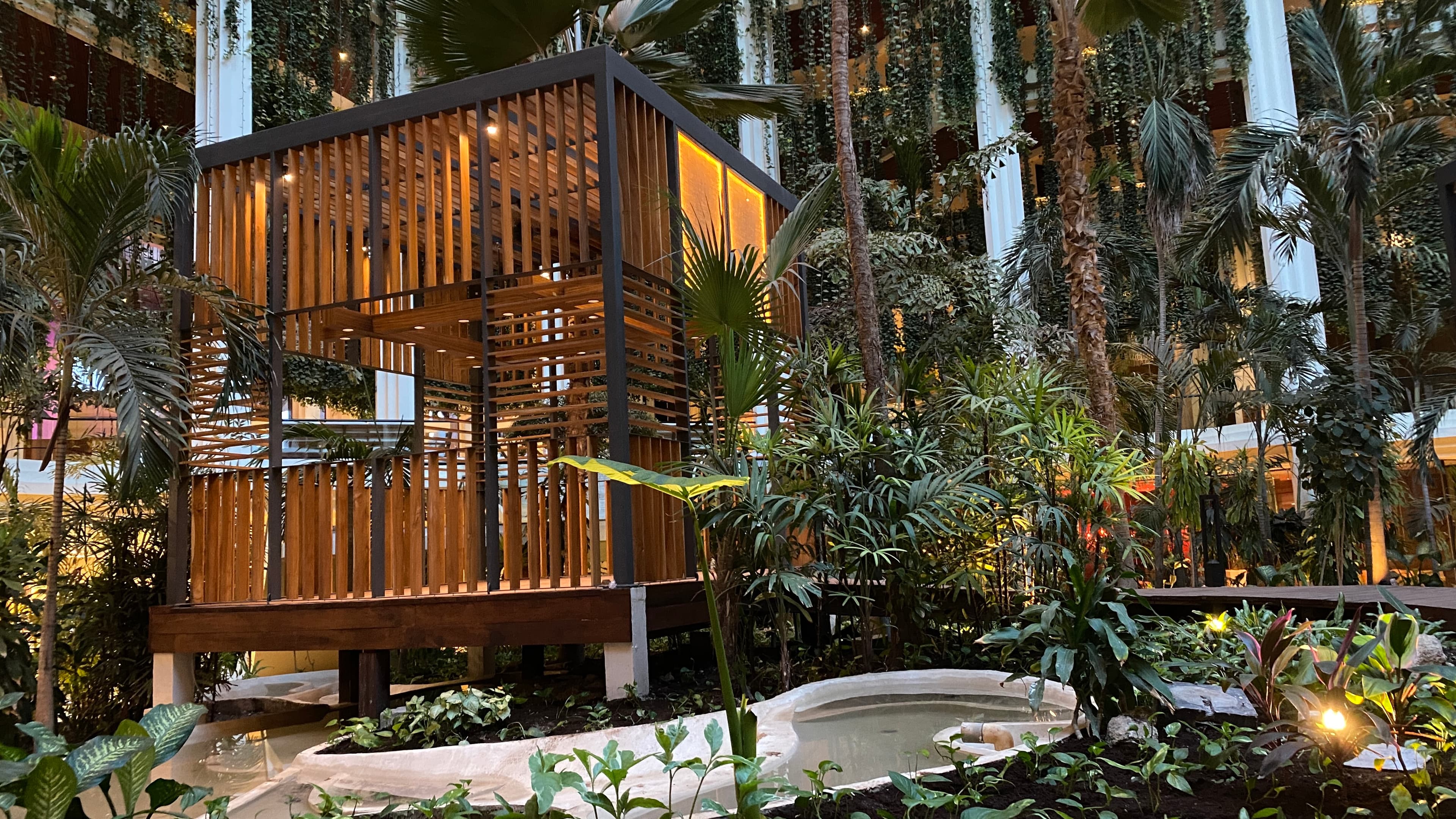
Lemon Fish is a restaurant environment conceived entirely around a timber pavilion language — four individual dining pods set within a tropical garden inside the Paradisus Cancún hotel. Wood 4 U was responsible for the custom millwork and architectural joinery that gives the space its identity: the slatted timber screens, the backlit panel installations, the bar counter and all material transitions across the interior.
“The timber is not decoration. It is the structure, the enclosure, and the atmosphere — all at once.”
The Concept
A Restaurant Made of Rooms
Rather than a conventional dining room, Lemon Fish is structured as four freestanding timber pavilions — each one a self-contained dining enclosure, open enough to feel part of the tropical garden, intimate enough to feel private.
The millwork brief required every pod to read as a piece of architecture: structural timber frames, rhythmic slatted screens, integrated lighting and consistent material transitions from floor to ceiling.
“Each pod is a complete millwork composition — frame, skin, ceiling, light.”
Wood 4 U — Design Approach
Craft Elements
What Was Built
Timber Slatted Screens
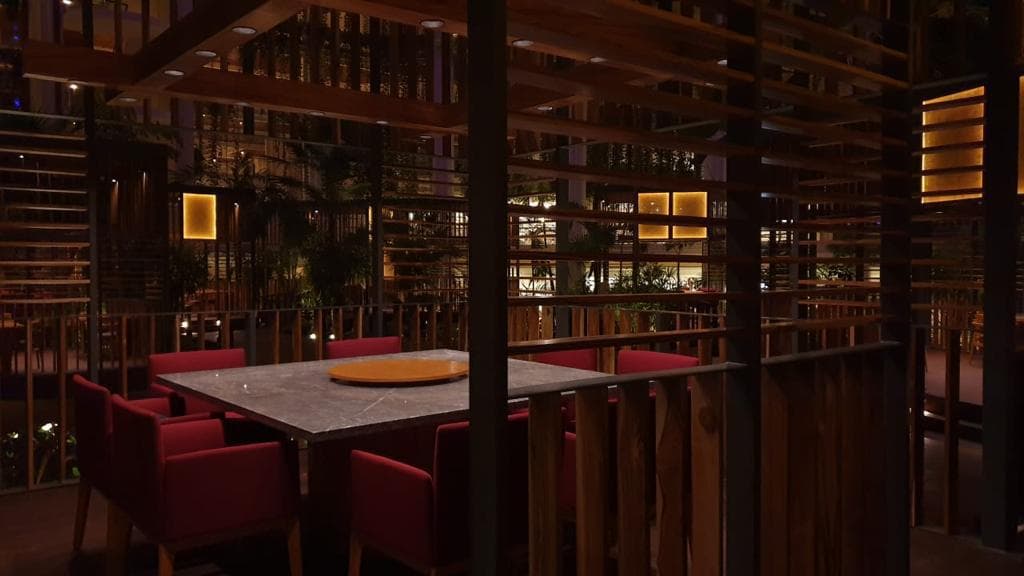
The defining element of the pavilion language. Vertical hardwood slats, precisely spaced and consistently detailed, form the perimeter skin of every dining pod. The rhythm of the slats — and the light that passes between them — is the visual identity of the restaurant.
Backlit Panel Installations
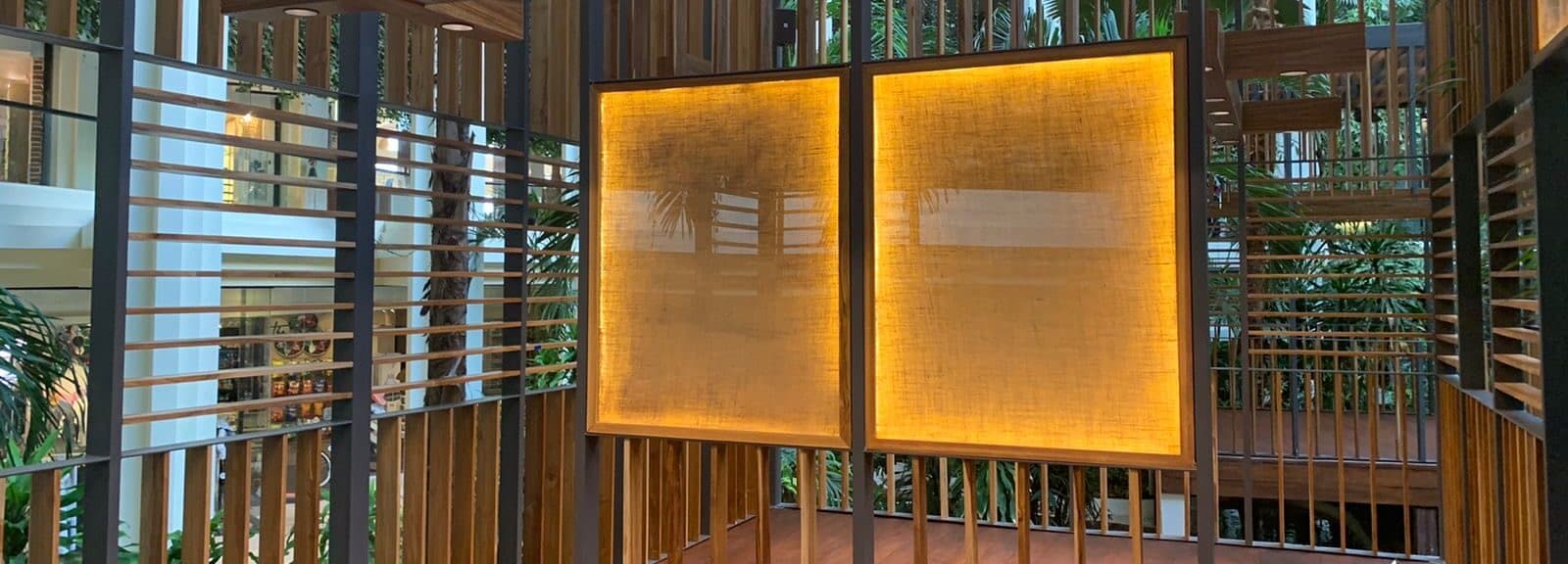
Woven natural panels, framed in timber and backlit from behind, create amber focal points within each enclosure. Each panel is a crafted object: the frame, the weave tension and the light diffusion are resolved as a single detail.
Bar Counter & Joinery
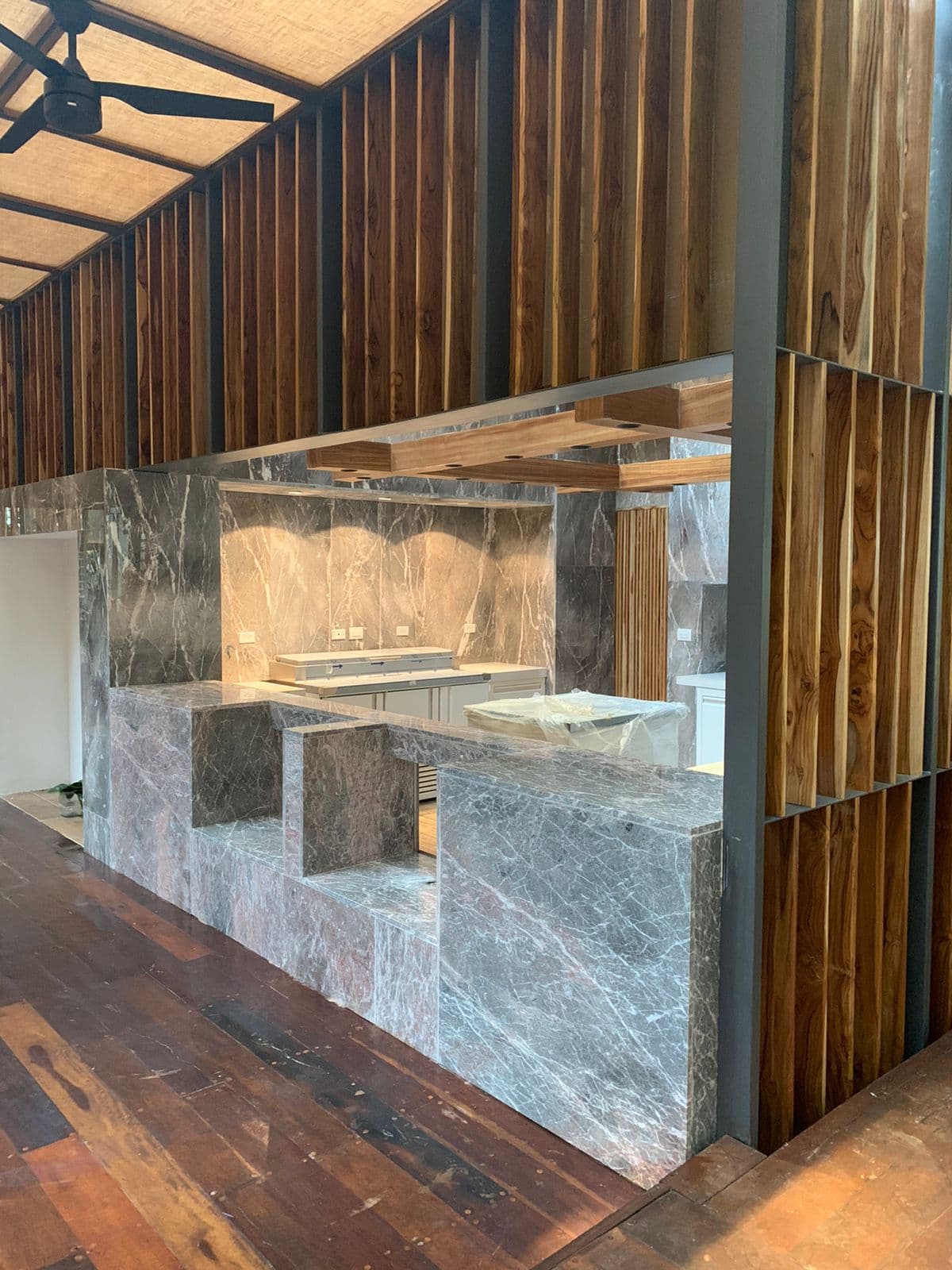
The bar counter combines a reed-clad body with a marble top — a material contrast that anchors the hospitality language of the space. The joinery detail at the transition between cane and stone required precise installation to maintain a clean finish edge.
Marble Surface Integration
Grey veined marble is used across buffet stations, bar tops and wall cladding. The material reads in contrast to the warmth of the timber — and the precision of each marble-to-timber junction is a direct reflection of the installation quality.
Timber Ceiling & Walkway
The connecting walkway between pods is enclosed above with a full timber ceiling treatment — slats, structural members and woven infill panels creating a continuous canopy that extends the millwork language into the circulation space.
Structural Framing
Behind every screen and surface is a structural hardwood frame — engineered to support the enclosure loads, detailed to remain visually clean, and finished to match the surface millwork. Frame and finish are resolved as one.
Material Palette
Hardwood. Marble. Woven panel. Tropical. Four materials — one coherent atmosphere.
Hardwood
Structure & Screen
Dark-toned hardwood used for all structural framing, slatted screens, decking and ceiling elements. Consistent species selection across the full interior.
Grey Marble
Surfaces & Cladding
Veined grey marble across bar tops, buffet counters and wall panels. Selected for material weight against the warmth of the timber.
Woven Panel
Light & Texture
Natural woven fibre panels backlit behind timber frames. The diffused amber glow defines the evening atmosphere of each pod.
Reed & Cane
Bar Front Detail
Tight bundle reed cladding on the bar counter body — a natural material with fine texture that bridges the hardwood and marble junction.
Material selection at Lemon Fish was not decorative — it was structural. Each surface was chosen for how it performs under restaurant conditions: heat, humidity, contact, cleaning. Craft and durability were resolved as a single requirement.
Photography
The Work
Execution
Detail-First. From the Frame Out.
In a project where the millwork is the architecture, there is no tolerance for a misaligned slat or an unresolved junction. The execution at Lemon Fish required the same discipline applied to structural elements as to surface finishes — because at the scale of individual dining pods, everything is visible, everything is touched, and everything is part of the guest experience.
Dimensional Precision
Slat spacing, panel alignment and frame geometry resolved to specification across all pods.
Material Consistency
Timber species, finish tone and grain orientation matched across the full interior — no variation between pods.
Junction Resolution
Every material transition — timber to marble, cane to stone, slat to ceiling — detailed and installed as a finished condition, not a site fix.
The Result
A Restaurant Built from Wood
The four timber pavilions — slatted hardwood screens, backlit woven panels and a marble-topped bar — form the complete visual identity of Lemon Fish at Paradisus Cancún. Every surface visible to the guest, from structural frame to finish detail, is the work of Wood 4 U.
Start a Project
Planning a signature hospitality space?
Let's talk about the design brief, the materials and what precision means for your project.
Start a conversation →Custom Millwork
Designed and built to the specific geometry of each space.
Material Selection
Timber, stone and natural materials sourced and matched for hospitality performance.
Architectural Detail
Every junction, transition and surface resolved as a finished condition.